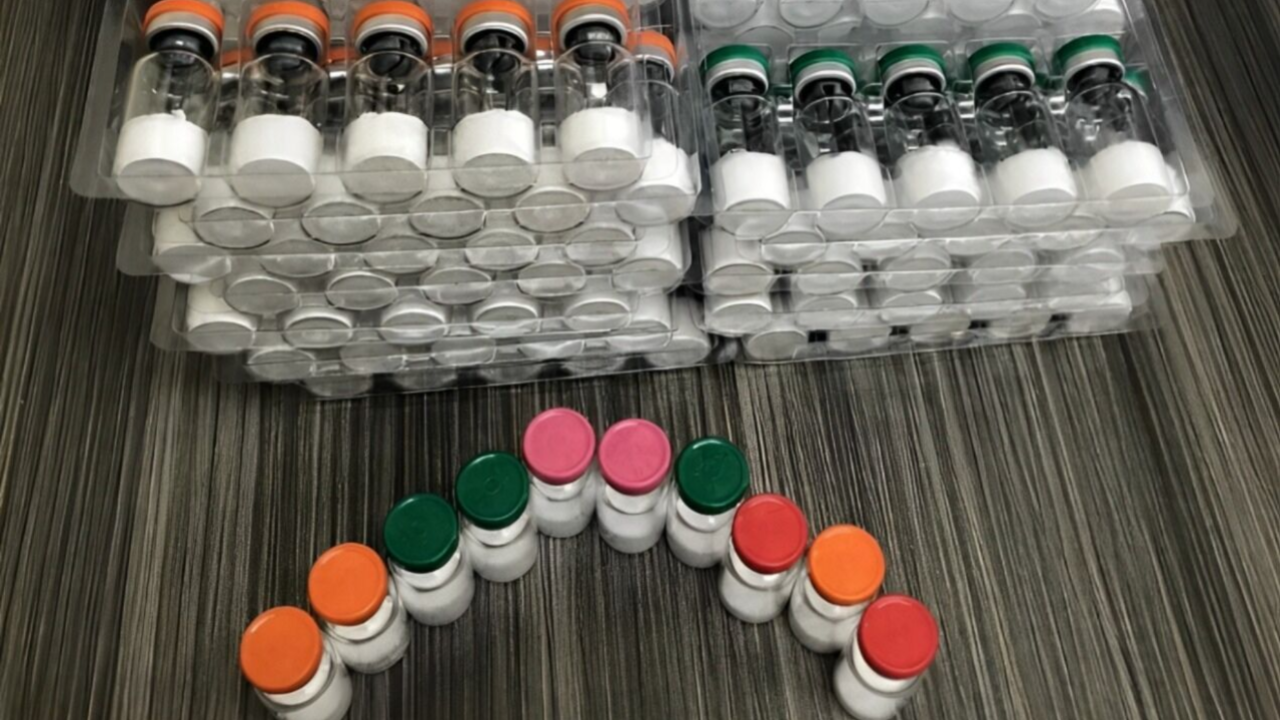
1. In order to achieve the ideal solubility, researchers must test a small amount of peptide in peptide solubility. This helps the researcher decipher whether the solution is a good match with the peptide.
2. Allow time for the peptide to reach room temperature before attempting to dissolve it in solution.
*Utilize solutions that are able to be removed by lyophilization if sterile water solution does not work when trying to dissolve the peptide. If none of the options are successful, then it can be removed by the lyophilization which allows the researcher to start the process again without losing or affecting the peptide.[3]
3. A slightly warmer solution, for example less than 40 Celsius or 104 Fahrenheit, may aid in solubility. Sonication techniques can also be of use. It is vital to note that this only helps in dissolving a peptide. It will not change the peptides natural characteristics.
Researchers should evaluate an amino acids composition of the peptide to predict the solubility characteristics of a peptide. It is essential to check the number and type of ionic charges of a peptide influence solubility. It is imperative as it helps tell whether the peptide is acidic, basic, or neutral. To figure this out, one would assign a value of -1 to amino acids (also known as residues). For example, you may see Asp (D), Glu (E), and C-terminal (COOH). Then you would assign +1 value to each basic amino acid which includes Lys (K), Arg (R), and N-terminal NH2. You would also assign value to +1 to each His (H) amino acid at pH6. And finally calculate the net charge overall of the peptide. This is done by adding up the peptide’s total number.